Why This Poem Matters So Deeply
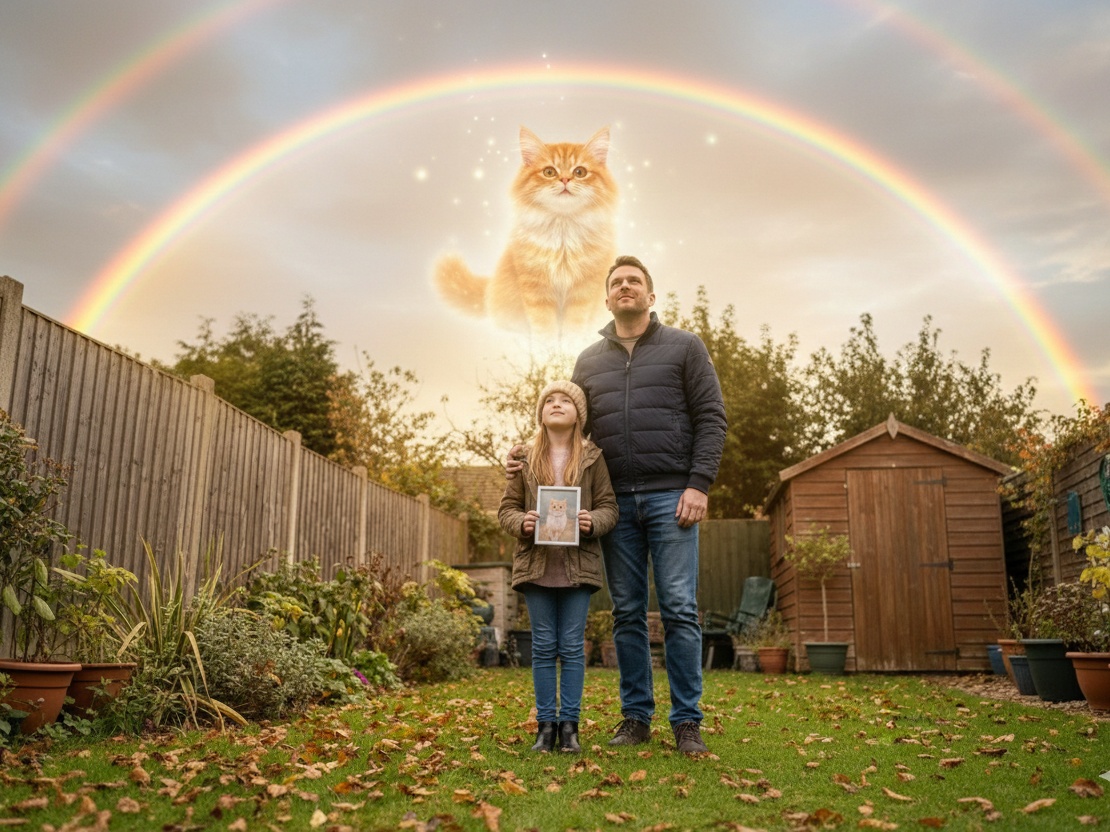
If you’ve ever lost a dog, cat, or any beloved animal companion, you’ve likely heard of the Rainbow Bridge — a beautiful, imaginative place described in a poem that has comforted millions of grieving pet parents across decades. Even without quoting it directly, the poem’s imagery is unmistakable: a peaceful meadow, perfect health restored, joyful companionship, and the promise of a loving reunion.
But why does this poem touch so many hearts?
Why does it come up again and again in pet-loss communities?
And why does imagining our pets in this serene place bring such profound comfort during one of life’s deepest heartbreaks?
This article gently explores: what the Rainbow Bridge imagery symbolizes, why it resonates so strongly, how it supports healthy grieving and the reasons so many people find healing in its message
Let’s explore this tender, meaningful topic with softness, understanding, and compassion. ❤️
1. What the Rainbow Bridge Represents: A Sanctuary Beyond Loss
The Rainbow Bridge isn’t described as a heaven in the traditional sense, nor is it tied to any specific religion. Instead, it occupies a gentle space between metaphors, imagination, and emotional need.
At its heart, the Rainbow Bridge describes:
A peaceful meadow
Where the environment is safe, warm, and full of natural beauty — symbolic of serenity and restored comfort.
A place where pets are healthy again
No pain. No age. No illness. Their bodies are whole and vibrant.
A sense of freedom and joy
Animals run, play, and explore without fear or limitation.
A promise of reunion
The most powerful part: one day, the pet and their human will meet again.
And when that moment arrives, all separation dissolves.
Why this matters in grief
The Rainbow Bridge gives the mind a safer picture —
a loving alternative image to hold onto during heartbreak.
When a pet dies, one of the most painful experiences is imagining their last moments,bthe loss of their physical presence
It answers the aching question so many pet parents ask:
👉 “Where is my pet now?”
👉 “Are they okay?”
👉 “Are they still with me in some way?”
The poem offers a compassionate, non-religious, emotionally protective answer.
2. The Psychology Behind Why the Rainbow Bridge Brings Comfort
Understanding why humans turn to imagery like the Rainbow Bridge requires understanding the psychology of grief itself.
When someone we love dies, our brains search for:
- meaning
- safety
- understanding
- continuity
- a way to stay connected
The Rainbow Bridge poem satisfies all four of these psychological needs.
A. It creates emotional safety
Grief is frightening. The poem offers a soothing, structured place for the mind to rest.
B. It provides relational continuity
In psychology, we call this a continuing bond.
The relationship doesn’t end — it changes form.
C. It reduces traumatic imagery
Instead of replaying painful last moments, the mind can imagine a serene meadow, sunlight, and comfort.
D. It gives hope during despair
Hope doesn’t erase grief, but it cushions it.
E. It helps the brain process loss without overwhelm
Grief is neurologically heavy. Imagining your pet happy, safe, and free helps regulate emotional overload.
The Rainbow Bridge, in essence, is a coping tool wrapped in poetry.
3. The Symbolism of the Rainbow: Why It Is Universally Healing
Rainbows appear across cultures as symbols of:
- beauty after storms
- transition
- hope
- connection between worlds
- divine or spiritual messages
- peace
- renewal
In the context of pet loss, the rainbow becomes:
A bridge between two forms of love
The love we shared in life
and
the love that continues beyond physical presence.
A symbol of duality
Rainbows appear when sunlight meets rain.
Just like grief appears when love meets loss.
An image of gentle connection
Not a wall, not a barrier — but a bridge.
A pathway, even if symbolic, between you and your pet.
Why this resonates deeply
The human mind loves metaphors that create meaning.
The Rainbow Bridge is a metaphor that transforms heartbreak into connection.
4. Pets Are Family — and the Poem Validates That Truth
One of the hardest parts of pet loss is the way society sometimes minimizes it.
People may say things like:
- “You can just get another one.”
- “It was only a dog.”
- “It’s not the same as losing a person.”
But for many, pets are:
- emotional companions
- daily sources of comfort
- members of the household
- protectors
- best friends
- safe spaces
- emotional support
- parts of our identity
The Rainbow Bridge poem acknowledges this truth beautifully:
👉 It treats pets as deeply loved beings.
👉 It treats the bond as important and worthy.
👉 It validates the grief as serious and meaningful.
This validation alone can make grieving feel less lonely.
5. Why Imagining Pets Happy and Healthy Eases Emotional Pain
One of the most painful parts of pet loss is remembering:
- the illness
- decline
- old age
- euthanasia decisions
- medical procedures
- fear or discomfort
- their final moments
These memories can haunt people.
Some pet parents replay them on a loop, unable to quiet the “what-ifs.”
The Rainbow Bridge poem replaces those images with:
- health
- energy
- warmth
- joy
- restored vitality
It gives your mind permission to imagine them:
- running again
- seeing again
- hearing again
- free from pain
This mental shift can significantly soften trauma and ease guilt.
6. The Rainbow Bridge Encourages Continuing Bonds (A Healthy Grief Process)
Modern psychology has moved away from the idea of “letting go” or “moving on.”
It is now widely accepted that healthy grieving includes maintaining a continuing bond with the one who has died.
The Rainbow Bridge poem supports this beautifully:
- You still love your pet.
- Your connection continues.
- The relationship isn’t erased by loss.
- The reunion symbolizes ongoing emotional attachment.
This helps grieving individuals feel:
- grounded
- secure
- connected
- supported
- less alone
Grief heals when love has somewhere to go.
The Rainbow Bridge gives it a place.
7. It Offers Hope for Reunion — Even for People Who Aren’t Religious
The beauty of the Rainbow Bridge is its neutrality.
It does not reference any religious doctrine.
It does not conflict with major belief systems.
It does not preach or instruct.
Instead, it gently offers:
👉 A picture of peace
👉 A place of joy
👉 A moment of reunion
👉 A comfort that transcends culture
People of all backgrounds find solace in it because:
- it’s inclusive
- it’s imaginative
- it doesn’t demand belief, just openness
- it offers emotional comfort without theological pressure
This universality is a major reason the poem is so deeply loved.
8. The Meadow Symbolizes a Return to Innocence, Joy, and Pure Love
The meadow described in the poem is more than scenery — it’s symbolic.
It represents:
- freedom
- safety
- gentle sunlight
- natural beauty
- harmony
- a place without fear
Emotionally, it symbolizes:
- the best moments of your pet’s life
- their happiest memories
- the essence of their spirit
- unconditional love
The meadow is the perfect environment for healing imagery.
It puts your pet in a place that feels right.
Pets don’t need cities or monuments — they need grass, warmth, and room to play.
The poem gives them exactly that.
9. The Reunion Scene: Why It Feels So Powerful to the Human Heart
In the poem’s imagery, there is a moment when you and your pet meet again.
Even without quoting it, the symbolism is clear:
- recognition
- excitement
- unconditional joy
- restored relationship
- wholeness
This reunion touches one of humanity’s deepest emotional needs:
👉 The longing to be reunited with someone we love.
From an attachment psychology perspective:
- you were your pet’s safe base
- they were your emotional refuge
- reunion imagery satisfies the nervous system
- it creates emotional regulation
- it helps the heart process separation
The idea of seeing them again — whole, joyful, and full of love — brings a sense of peace that nothing else can offer.
10. The Poem Helps People Make Sense of Grief
Grief is messy.
There is no map, no instructions, no timeline.
But the Rainbow Bridge poem offers a kind of emotional structure:
- first, an explanation of where your pet might be
- then, reassurance that they are safe
- next, the comfort of imagining them joyful
- finally, hope for a future reunion
This emotional arc mirrors the natural stages of healing:
- shock
- sadness
- adjustment
- acceptance
- connection
The poem provides a narrative — something the grieving brain desperately seeks.
11. It Helps Children Understand Death More Gently
For children, losing a pet can be:
- their first experience with death
- a deeply confusing event
- emotionally overwhelming
The Rainbow Bridge offers:
- gentle language
- non-scary imagery
- a comforting explanation
- a peaceful place for their pet
- reassurance that love continues
It’s developmentally appropriate, psychologically safe, and emotionally supportive.
Many parents use the Rainbow Bridge poem as a tool for helping children express grief, ask questions, and process their feelings.
12. The Poem Creates a Community of Shared Understanding
One of the quietly powerful aspects of the Rainbow Bridge is its role in creating community.
People around the world share it to support others.
This creates:
- belonging
- connection
- empathy
- shared emotional space
- validation
- collective healing
When someone posts “My pet crossed the Rainbow Bridge today,”
those who understand instantly feel compassion.
It becomes a universal language for pet grief.
13. It Helps Pet Parents Release Guilt and Self-Blame
Many grieving pet owners struggle with guilt:
- “Did I do enough?”
- “Was it the right time?”
- “Did they know I loved them?”
- “Should I have caught the illness earlier?”
- “Was I a good caretaker?”
The Rainbow Bridge poem offers a counter-image:
- your pet is safe
- your pet is happy
- your pet is no longer suffering
- your pet is not angry
- your pet still loves you
This can soften self-blame, relieve emotional burden, and help people remember the love instead of the loss.
14. The Rainbow Bridge Allows Grievers to Reconnect With Positive Memories
Pet loss often floods the mind with painful memories:
- the vet visit
- the decline
- the final day
The poem gently redirects the mind to:
- joy
- play
- affection
- companionship
- shared experiences
This shift allows people to heal without being stuck in trauma imagery.
Psychologically, this is essential.
It helps grief integrate into memory more peacefully.
Conclusion: Why This Poem Endures — And Why It Still Comforts Millions
The Rainbow Bridge poem has endured for decades because it speaks to something timeless:
The love between humans and animals is pure, uncomplicated, and deeply meaningful.
And when that love is broken by loss, the heart needs:
- comfort
- imagery
- hope
- softness
- a way to hold onto the bond
The Rainbow Bridge provides all of that.
It reassures you that:
- your pet is okay
- your love continues
- the relationship isn’t gone
- your grief is valid
- hope exists beyond loss
Whether you view it as metaphor, spiritual truth, or emotional story, its impact is undeniable.
It is a gentle hand on your shoulder during heartbreak —
a reminder that the love you shared mattered,
that your grief is honored,
and that somewhere, in a peaceful meadow beyond the pain,
your beloved companion is running free, whole again, waiting for the day when your hearts reconnect.
Love doesn’t end.
It transforms.
And the Rainbow Bridge is one of the most beautiful ways we express that truth.