
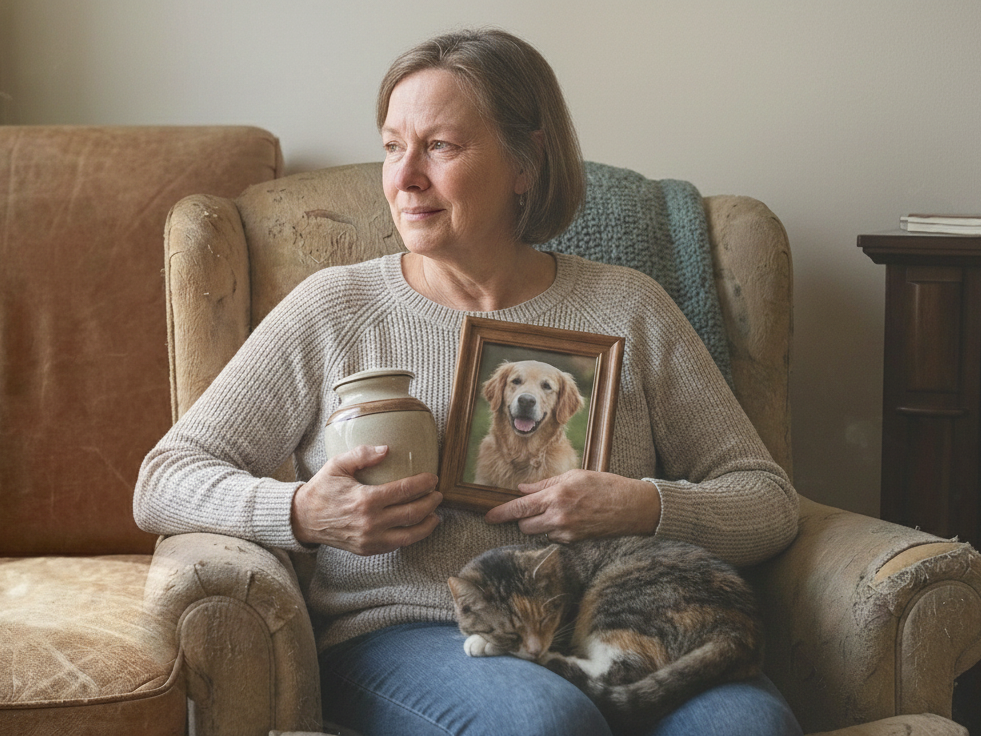
Gentle Guidance for Dog and Cat Parents
Grief after losing a beloved pet doesn’t move in a straight line—and it certainly doesn’t disappear on a schedule. Many pet parents feel better for a while, only to be surprised when a memory, a scent, or even a quiet moment brings the sadness back. These emotional “waves” are normal, human, and part of loving deeply.
Here’s a compassionate, magazine-style guide to understanding and navigating those resurfacing moments of grief.
1. Know That Grief Isn’t Linear
Healing after pet loss often comes in cycles. You may feel steady for weeks, then suddenly overwhelmed again. This does not mean you’re “going backwards.” It simply means your heart is still adjusting to a new reality.
2. Recognize Your Emotional Triggers
Sometimes the waves hit without warning. Other times, there are clear triggers—like your pet’s birthday, adoption day, favorite toy, or a familiar routine. Understanding what sparks these moments can help you respond with kindness rather than frustration.
3. Let the Feelings Come Without Judgment
When the sadness resurfaces, try not to suppress it. Sit with it, breathe through it, and let yourself feel. Grief is a sign of love, not weakness.
4. Create a Gentle Ritual for the Moments It Returns
A small grounding activity can help soothe an emotional wave. Consider:
- Lighting a candle in your pet’s memory
- Holding their collar or a keepsake
- Looking at a favorite photo
- Stepping outside and taking five deep breaths
These tiny rituals give your emotions a place to land.
5. Reach Out to Someone Who Understands
Share your moment with a friend, family member, or pet-loss support group. Even a short message like “Having a tough moment missing my pet today” can ease the heaviness.
6. Revisit Memories in a Healing Way
Instead of avoiding reminders, try shifting how you interact with them. Look through photos, write down a favorite memory, or tell a story about your pet that makes you smile. Turning pain into connection can soften the intensity of grief.
7. Check In With Your Body
Waves of grief can show up physically—tight chest, fatigue, or heaviness. Pause and ask:
Have I eaten? Hydrated? Rested? Moved a little today?
A gentle stretch or a warm drink can bring comfort back to your body.
8. Don’t Compare Your Healing Journey
Your grief is yours alone. It doesn’t matter how long it’s been since your pet passed—months or even years. What matters is honoring your emotional truth, not living up to anyone else’s timeline.
9. Celebrate the Bond You Still Carry
When emotions resurface, take it as a reminder of the love your pet left behind. Their impact is still alive in your routines, your habits, and your heart. That’s not something to “get over”—it’s something to cherish.
10. Know When Extra Support Might Help
If the emotional waves feel too heavy, too frequent, or are disrupting daily life, talking to a counselor or therapist who understands pet loss can make a world of difference. Seeking support is a sign of strength.
Final Thoughts
Grief coming back is not a failure—it’s a continuation of the love you shared with your pet. With gentle coping tools and compassion for yourself, you can ride each wave with more understanding and less fear. Healing doesn’t mean forgetting. It means learning to move forward while holding your pet’s memory close.