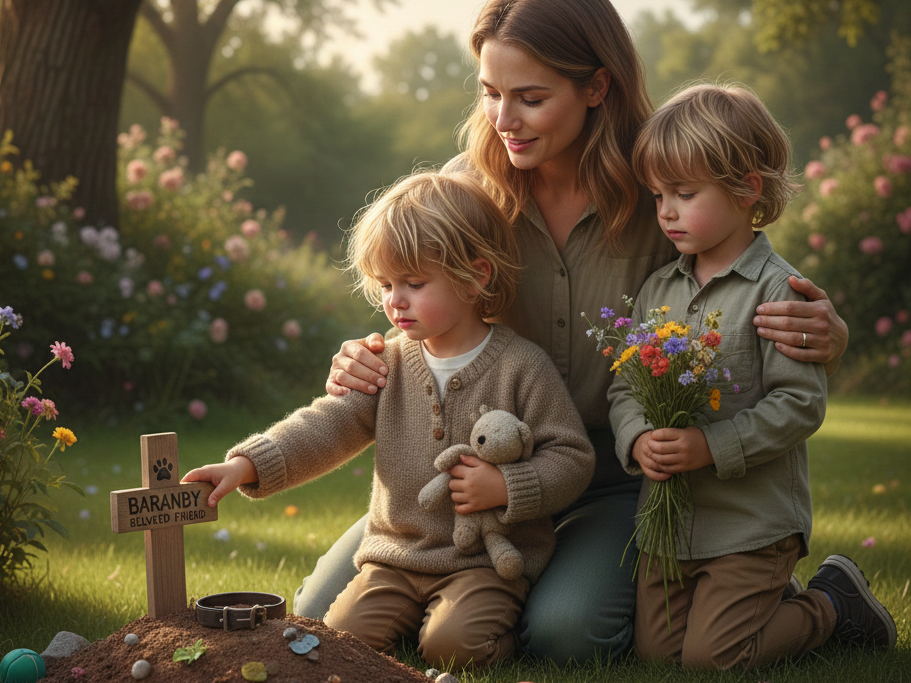
Explaining the Psychology Behind Pet Loss and Validating Why the Bond is So Deeply Meaningful.
When a cherished pet—whether a loyal dog, a purring cat, or any beloved companion—passes away, the pain can feel overwhelming, like a physical weight in your chest. And you know what? That profound sadness is not only normal, it is a beautiful reflection of the extraordinary love you shared.
In the gentle language of psychology, we recognize that pets are not “just animals.” They are intricate members of our family, our most steadfast friends, and a source of unconditional love that enriches our lives every single day.
This comprehensive, heartfelt guide is here to walk alongside you, offering a compassionate, evidence-based understanding of why the loss of a pet is a uniquely painful form of grief. We’ll explore the psychological, biological, and social reasons for this deep hurt, reminding you that your feelings are valid, your bond was real, and your sadness is the price we pay for having loved so profoundly.
Let’s explore this tender journey of understanding together. We see you, and we honor your pain.
1. The Psychology of the Pet as Family: The Non-Judgmental Companion
The Deepening Definition of Family
The idea that a pet is “part of the family” is more than just a sentimental phrase; it’s a psychosocial reality. For many, the bond with a pet fulfills the same emotional roles typically associated with human family members. They are the constant, stable presence in a changing world.
- Emotional Anchorage: Your pet represented a reliable anchor. They were the one who met you at the door, their presence a predictable comfort. This predictability fosters a profound sense of security and belonging.
- A “Secure Base”: Psychologically, your dog or cat often functioned as a “secure base,” a concept derived from Attachment Theory. A secure base is a trusted figure that allows you to feel safe enough to explore the world, knowing you have a loving, reliable haven to return to. When this base is removed, it shakes your entire emotional foundation.
- The Shared Life Narrative: Pets are witnesses to our life. They’ve been there through relationship changes, job transitions, illnesses, and celebrations. They are integrated into the very story of your life, making their absence feel like a chapter is missing.
When this key family member is gone, the void is vast. The hurt is real because the relationship was real, and it was fundamental to your well-being.
2. The Bio-Chemical Proof of Love: Your Brain on Pets
The Neurobiology of the Human-Animal Bond
The incredible bond you share with your pet is supported by powerful brain chemistry. It’s not just a feeling; it’s a biological imperative.
When you engage in loving interaction with your pet—stroking a cat’s soft fur, or looking into your dog’s devoted eyes—your brain releases a cocktail of neurochemicals:
- Oxytocin: Often called the “love hormone” or “cuddle chemical,” Oxytocin is released in both humans and pets during affectionate contact. This hormone promotes bonding, trust, and feelings of calm. It’s the same chemical that helps a parent bond with a child.
- Dopamine: This neurotransmitter is associated with the brain’s reward system. The joy you felt when playing with your pet, and the anticipation of seeing them, were fueled by dopamine, reinforcing the positive loop of the relationship.
- Serotonin: This chemical helps regulate mood, sleep, and appetite. Interactions with pets are proven to boost serotonin levels, helping to reduce anxiety and depression.
When your pet dies, your brain suddenly misses this steady, predictable source of chemical well-being. This biological withdrawal contributes significantly to the feelings of anxiety, low mood, and physical heaviness experienced during grief. Your whole body is mourning the loss of a deeply therapeutic relationship.
3. The Fragmentation of Routine: The Loss of Shared Life
The Disruption of Daily Rhythms
Grief often involves missing the major moments, but with a pet, the pain is frequently located in the small, mundane details of daily life. This is the loss of shared ritual.
Think about the sheer number of activities intertwined with your pet:
- The sound of the dog collar jingling.
- The rhythmic tap-tap-tap of paws on the floor.
- The need to get up for the morning walk or feeding.
- The warmth of a cat sleeping on the edge of your keyboard.
- The necessity of turning down the volume during a nap.
When a pet is lost, all these daily micro-routines—the scaffolding of your day—collapse. The house is not just quieter; it is empty of the specific sounds and motions that structured your time and gave your home its unique energy. This profound sense of environmental emptiness is a significant component of pet grief, often making the loss feel pervasive and unavoidable.
4. The Power of Unconditional Positive Regard
The Purest Form of Acceptance
One of the most profound roles a pet plays is that of a source of unconditional positive regard—a key concept in client-centered therapy. This means they love us without any conditions.
- They do not care about your bank account, your career, your political views, or a bad mood you had yesterday.
- Their acceptance is absolute and non-judgmental.
- They see you at your most vulnerable—in your pajamas, crying, or celebrating—and their reaction is always the same: devoted love.
Losing this non-judgmental, absolutely safe relationship can feel like losing the safest, warmest sanctuary in your life. This pure, simple love is a rare commodity in the human world, and its loss leaves a spiritual and emotional gap that is difficult to articulate.
5. The Silent Confidant: The Pet as Emotional Mirror
Emotional Labor and the Burden of Secrecy
Pets are often our secret keepers and the only listeners who never interrupt, criticize, or minimize our feelings. They absorb the overflow of our emotional life, serving as an emotional mirror and pressure valve.
- Projection of Feeling: We often talk to our pets about our deepest fears, our worries, and our wildest dreams. This act of talking—even if the listener doesn’t “understand” the words—is a vital form of emotional processing.
- Co-Regulation: When you are upset, your pet often instinctively moves closer, providing contact that helps co-regulate your nervous system. Their calm, steady breathing and presence tell your body, “You are safe.”
Losing this confidant is akin to losing a part of yourself that was always available to listen, absorb, and comfort. The silence that follows is not just physical; it’s the silence of a heart that once felt completely understood.
6. Disenfranchised Grief: The Unique Pain of Societal Misunderstanding
The Problem of “Just a Pet”
Perhaps the cruelest aspect of pet loss is that it is often disenfranchised grief. This is grief that is not openly acknowledged, socially supported, or publicly validated.
When well-meaning (but insensitive) people say things like:
- “It was just a pet.”
- “You can get another one.”
- “Aren’t you over it yet?”
…they are suggesting that your relationship was secondary, and therefore, your pain is an overreaction.
This invalidation is deeply damaging because it forces the griever to feel:
- Guilty for feeling so sad.
- Isolated because they cannot openly share their true depth of sorrow.
- Confused about the legitimacy of their own emotions.
The truth is: Your pet mattered. Your feelings are real and appropriate. Your sadness is a true measure of the love you gave and received. You have the right to grieve your pet as fully and deeply as you would any other loved one.
7. The Complexity of Loss: Grieving Multiple Losses
The Ripple Effect of Pet Loss
Pet loss is rarely a single loss; it is often a cascade of interconnected losses that makes the grief experience so overwhelming. You are simultaneously mourning the loss of:
- The Physical Presence: Their fur, their scent, their touch, their unique sounds.
- The Role: The loss of your identity as a caregiver, dog walker, or cat cuddler.
- The Routine: The loss of the structured rhythm of your life (discussed in Section 3).
- The Future: The loss of all the anticipated memories and years you planned to share (Section 9).
- The Emotional Support: The loss of your primary source of unconditional love and comfort (Section 4).
This heavy, multi-faceted sorrow explains why your heart feels so fragmented. You are trying to process the simultaneous end of an entire chapter of your life, not just the loss of one being.
8. The Missing Future: Anticipatory Grief and Hope
Mourning the Years That Will Never Be
When we lose a human loved one, we often lose the past. When we lose a pet, we also intensely lose the future.
Humans often have relatively short lifespans compared to our own, but the hope we carry for our pets is boundless. We picture:
- The next season of walks.
- The next holiday morning with them curled up by the tree.
- Watching them grow old with us.
- The quiet comfort of their presence years from now.
The termination of this envisioned future is a profound loss called grief for the potential. It’s a painful realization that those moments—which felt so certain—have vanished, leaving a sharp ache for “what could have been.”
9. The Weight of Responsibility: The Burden of Euthanasia and Guilt
The Ethical Dilemma of the Final Decision
For many pet owners, especially those who have had to make the decision for euthanasia, guilt becomes a crippling aspect of grief. This phenomenon is often called “the burden of choice.”
- The Question of Timing: “Did I do it too soon?” or “Did I wait too long?”
- The Question of Effort: “Did I spend enough money?” “Did I try every treatment?”
It is crucial to understand that making a choice out of love to relieve suffering is the ultimate act of kindness and responsibility. You did not end their life; you ended their pain. You honored your pet by accepting the hardest, most selfless decision a caregiver must face. Your pet knew your intention was love, not malice. You did your best, and your best was enough.
10. The Transformation of Love: The Legacy of the Bond
The Endurance of Memory
The good news, psychologically speaking, is that love does not require physical presence to endure. While your pet’s physical life has ended, your relationship with them has simply transitioned into a new, permanent form: the legacy of memory.
- Internalized Presence: Your pet now exists as an internalized presence. The joy they brought, the lessons they taught, and the way they changed your routine and your heart are now woven into the fabric of who you are.
- Continuing the Bond: Psychological healing involves finding ways to continue the bond through memory—by telling stories, looking at photos, or keeping a small ritual in their honor. This is not about forgetting; it is about re-integrating the love into your ongoing life narrative.
Your love is resilient. It shifts from an active, physical relationship to a quiet, enduring reservoir of warmth and memory that no one can ever take away.
11. Embracing the Waves: Understanding the Non-Linear Nature of Grief
The Journey of Healing
It is important to remember that grief does not follow a neat, 5-stage progression. It is better understood as a series of waves.
- The Waves Analogy: Some days, the wave is a gentle ripple, and you feel okay. Other days, a memory will trigger a towering tsunami of sadness, knocking you off your feet. This non-linear, back-and-forth movement is perfectly normal.
- Healing is Not Forgetting: Healing does not mean you will stop missing your pet. It means the sadness will eventually become less sharp, less intrusive, and the warm memories will start to outnumber the moments of pain. The love is what remains, shining brighter than the initial sorrow.
Be kind to yourself. Give yourself the same patience and unconditional love your pet offered you.
Conclusion: Your Grief Is a Testament to Your Capacity to Love
You are not “overreacting.” You are not “being dramatic.” You are experiencing a profound, legitimate, and deeply painful loss of a loved one whose influence on your life was immeasurable.
Your pain is not a weakness; it is a testament to the strength and courage of your heart. You dared to love completely, and that love filled your pet’s life with happiness and comfort.
Your pet was lucky to have you. And you, undoubtedly, were lucky to have them.
Their story lives on—in the funny tales you tell, in the warmth of your fondest memories, and in the enduring kindness they inspired in your world. Their love continues to flow through you, a soft, constant river that time can never diminish.